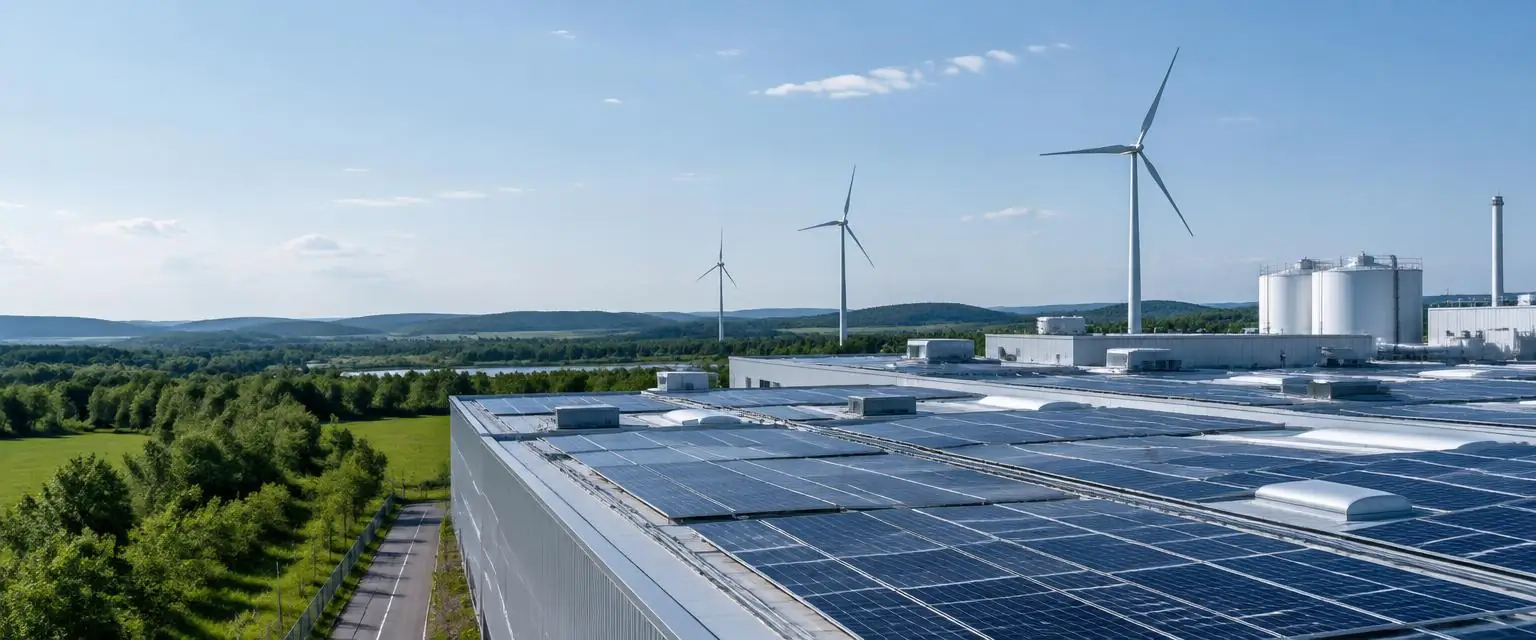
Industrial rooftop solar panels and wind turbines, illustrating sustainable supply chains

Carbon reduction plan template for UK public sector tenders

A carbon reduction plan template that follows the government structure, with guidance and a carbon reduction plan example for each section.

A Carbon Reduction Plan sets out a supplier's commitment to Net Zero, its current emissions and the actions it is taking to reduce them. Central government buyers ask for one on major contracts, and many other public and private buyers now ask for the same document in tenders and supplier reviews.

This carbon reduction plan template follows the structure of the government template, so evaluators find each element where they expect it. It adds practical guidance for every section, tables for baseline and current emissions, a project log and a final checklist to run before the plan is signed and published.

Free to download. Available as Word and PDF.

What's included

  • Supplier details and publication information
  • Net Zero commitment statement
  • Baseline emissions table for Scope 1, Scope 2 and the required Scope 3 categories
  • Current emissions table with change since baseline
  • Emissions reduction targets and projected pathway
  • Log of completed and planned carbon reduction projects
  • Declaration and board sign-off wording
  • Common pitfalls, a hypothetical worked example and a review checklist

How to use this template

  1. Confirm which policy note applies to the tender: PPN 006 or PPN 06/21.
  2. Gather 12 months of energy, fuel, travel, waste and transport data, and choose a baseline year.
  3. Calculate emissions in tonnes of carbon dioxide equivalent using the government conversion factors.
  4. Complete the baseline and current emissions tables, stating the method behind each figure.
  5. List the projects already completed and those planned, then set realistic targets.
  6. Have a director review and sign the plan, then publish it on your website.

Who needs a carbon reduction plan and when

Procurement Policy Note 006 applies to central government procurements under the Procurement Act 2023 that started on or after 24 February 2025. Contracts expected to be worth more than £5 million a year, including VAT, usually require bidders to provide a Carbon Reduction Plan.[1]

PPN 06/21, which PPN 006 replaced, still applies to procurements that started before 24 February 2025, so check which note the tender documents refer to.[2]

Below that threshold, and outside central government, buyers often ask for a carbon reduction plan anyway as part of their own supply chain targets. A plan written to the government standard will usually satisfy them too.

How to complete each section

  • Commitment to Net Zero: state the year the organisation will reach Net Zero, no later than 2050, in one clear sentence.
  • Baseline emissions: choose a year with reliable data, explain why it was chosen and report Scope 1, Scope 2 and the required Scope 3 categories in tCO2e.
  • Current emissions: report the latest 12 months on the same basis as the baseline, so the change can be compared.
  • Targets: give a reduction pathway that follows from the planned projects, rather than a figure chosen to look ambitious.
  • Carbon reduction projects: list what has already been done since the baseline and what is planned, with dates.
  • Declaration and sign-off: use the standard declaration, have a director or equivalent sign it and publish the plan on the website.

The required Scope 3 categories are upstream transportation and distribution, waste generated in operations, business travel, employee commuting, and downstream transportation and distribution.[1]

Example

A carbon reduction plan example

Example: an illustrative excerpt for a fictional company. The figures are invented and show the format only.

Commitment: Example Services Ltd is committed to achieving Net Zero emissions by 2045.

Baseline year: 1 April 2024 to 31 March 2025, the first full year with complete fuel, energy and travel records. Baseline emissions: Scope 1, 210 tCO2e; Scope 2, 85 tCO2e; Scope 3 (included categories), 340 tCO2e; total, 635 tCO2e.

Completed project: replaced four diesel vans with electric vans in January 2026, reducing fleet fuel use. Planned project: switch the head office electricity contract to a renewable tariff at renewal in October 2026.

Common reasons submissions are rejected

  • No Net Zero commitment, or a target year later than 2050.
  • Required Scope 3 categories left out without explanation.
  • No baseline year, or a baseline that is not explained.
  • The plan is not signed off at board level or equivalent.
  • The plan is not published on the organisation's website, or is out of date.
  • A group plan that does not make clear it covers the bidding company.
  • Figures with no stated method, or in units other than tCO2e.

Frequently asked questions

A short document in which a supplier commits to reaching Net Zero, reports its baseline and current greenhouse gas emissions across Scope 1, Scope 2 and set Scope 3 categories, and lists the projects it has completed and plans to reduce them. It is signed by a director and published on the supplier's website.

Not in general law. It becomes a requirement when a buyer makes it a condition of a tender, as central government does on major contracts under PPN 006. Many other public and private buyers now ask for one, so suppliers who bid regularly often keep a current plan ready.

PPN 006 replaced PPN 06/21 for procurements under the Procurement Act 2023 that started on or after 24 February 2025. The core content of the plan is similar. PPN 06/21 still applies to procurements that started before that date, so check which note the tender documents name.

The government standard requires five Scope 3 categories: upstream transportation and distribution, waste generated in operations, business travel, employee commuting, and downstream transportation and distribution. Other categories can be added where data is available. Any required category that cannot yet be reported should be explained rather than left out.

At least once a year, with the latest 12 months of emissions and an updated list of completed and planned projects. An out of date plan is a common reason for a submission to be questioned, so set a review date when the plan is first published and keep the workings behind each figure.

Need help putting this into practice?

Every engagement is managed by our founder, starting with objectives agreed with you. Book an introductory call to see how our sustainable supply chains work could help.

Related templates

Last updated 12 November 2026